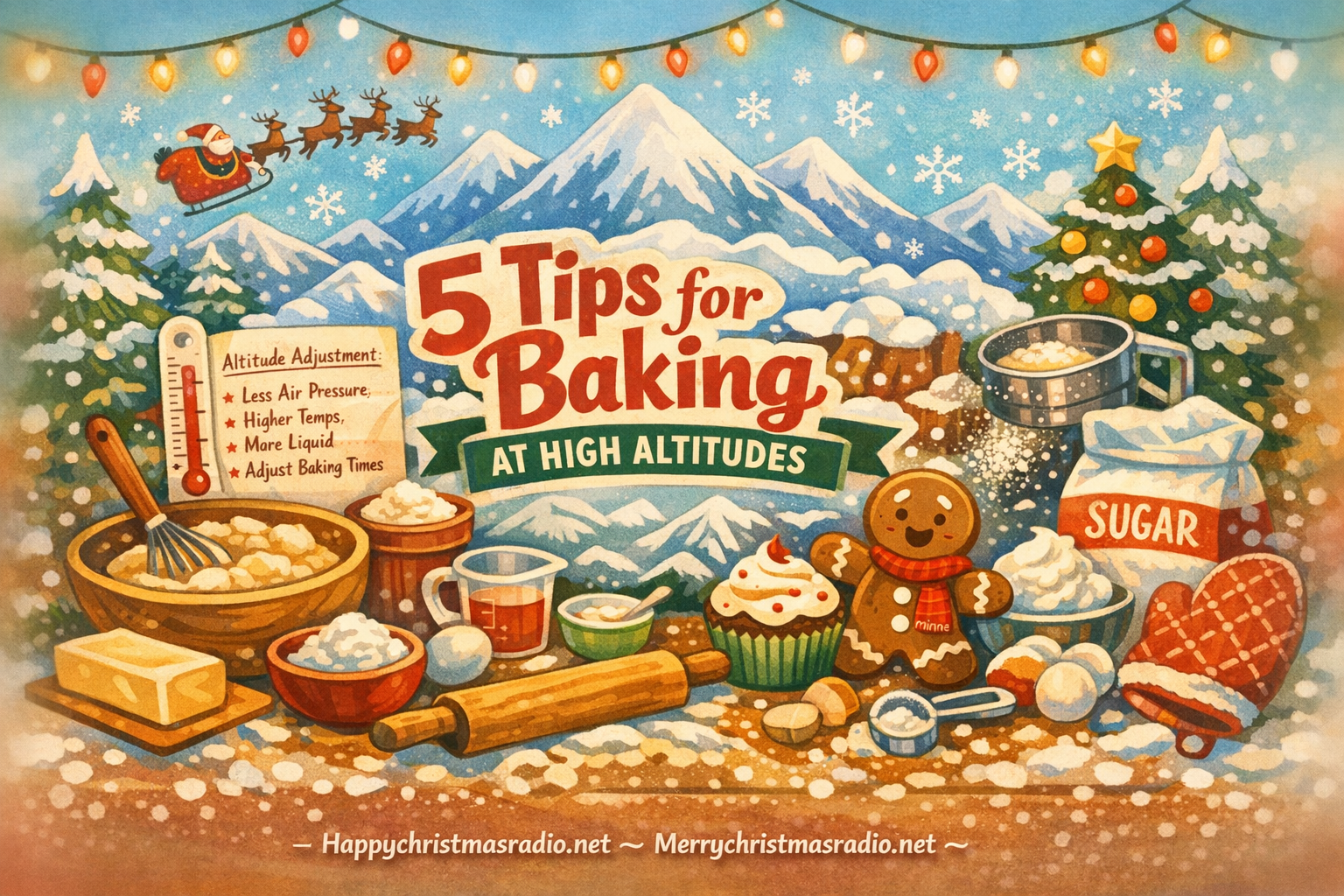
Understanding the Challenges of High-Altitude Baking
Baking during the Christmas season is a beloved tradition for many, but if you're at a high altitude, you may face unique challenges. The lower air pressure at high elevations can affect everything from rising times to moisture retention. This means that your favorite Christmas cookie recipe or holiday cake might need some adjustments. Here are five essential tips to ensure your holiday baking turns out perfectly, no matter how high you are.
1. Adjust Your Ingredients
One of the first things to consider is the balance of your ingredients. At high altitudes, flour can become drier due to lower humidity, which might call for some extra moisture. Adding a tablespoon or two of liquid can make all the difference in achieving that perfect dough consistency. Similarly, you might want to reduce sugar slightly, as too much can interfere with the structure of your baked goods.
2. Alter Baking Times and Temperatures
When baking at high altitudes, the cooking time may be shorter due to faster evaporation of moisture and quicker heat transfer. Keep a close eye on your creations. You might need to lower the baking temperature by about 15-25 degrees Fahrenheit to ensure even cooking without burning the edges. A little vigilance will help you turn out festive treats that are both delicious and visually appealing.
3. Experiment with Leavening Agents
Leavening agents like baking powder and baking soda can behave differently at high altitudes. Since the air pressure is lower, these agents can work more quickly, leading to over-risen baked goods that collapse. To counteract this, you may want to reduce the amount of baking powder or baking soda by about a quarter. This will help maintain the structure of your holiday cakes and breads.
4. Keep Track of Your Elevation
Every high-altitude area is different, so it’s essential to know your exact elevation. If you’re at 3,000 feet, you might need different adjustments than someone baking at 7,000 feet. Many resources are available that provide guidelines for specific elevations, so be sure to do a little research before diving into your Christmas baking extravaganza.
5. Don’t Be Afraid to Test and Tweak
Lastly, remember that baking is both a science and an art. It may take a few tries to perfect your recipes at high altitudes, so don’t hesitate to experiment. Keep notes of what works and what doesn’t, allowing you to refine your approach for next year’s Christmas baking bonanza. Your family and friends will appreciate the effort, and you’ll have the joy of sharing delicious treats made with love.
High-altitude baking doesn’t have to be intimidating. With these tips, you can tackle any holiday recipe and create memorable Christmas treats. So gather your ingredients, roll up your sleeves, and get ready to spread some festive cheer in your kitchen!